
Custom Landing Pages: The Simple Solution for Boosting Your Google Ad Conversions
Updated: February 24, 2026
Are you running Google Ads for your coworking space and driving them directly back to your homepage? If so, we’ve got a bit of a bad news/good news situation to share with you.
The bad news: driving your ads back to your homepage could be causing them to underperform in a serious way.
The good news: solving this problem requires only a simple fix—creating custom landing pages where you can direct your ad’s clickers to.
Let us explain.
- What Are Custom Landing Pages for Google Ads?
- Why Most Coworking Spaces Don't Use Landing Pages (And Why You Should)
- Why Custom Landing Pages Are Vital for Conversions
- The ROI Case: When Landing Pages Pay for Themselves
- How to Create Conversion-Driving Custom Landing Pages
- Essential Elements Every Landing Page Needs
- How Much is Too Much? Finding the Right Balance with Your Landing Pages
- How to Track and Measure Landing Page Effectiveness
- Testing Your Landing Pages for Maximum Performance
- Going Beyond Conversion Rate: Optimizing for the Right Leads
What Are Custom Landing Pages for Google Ads?
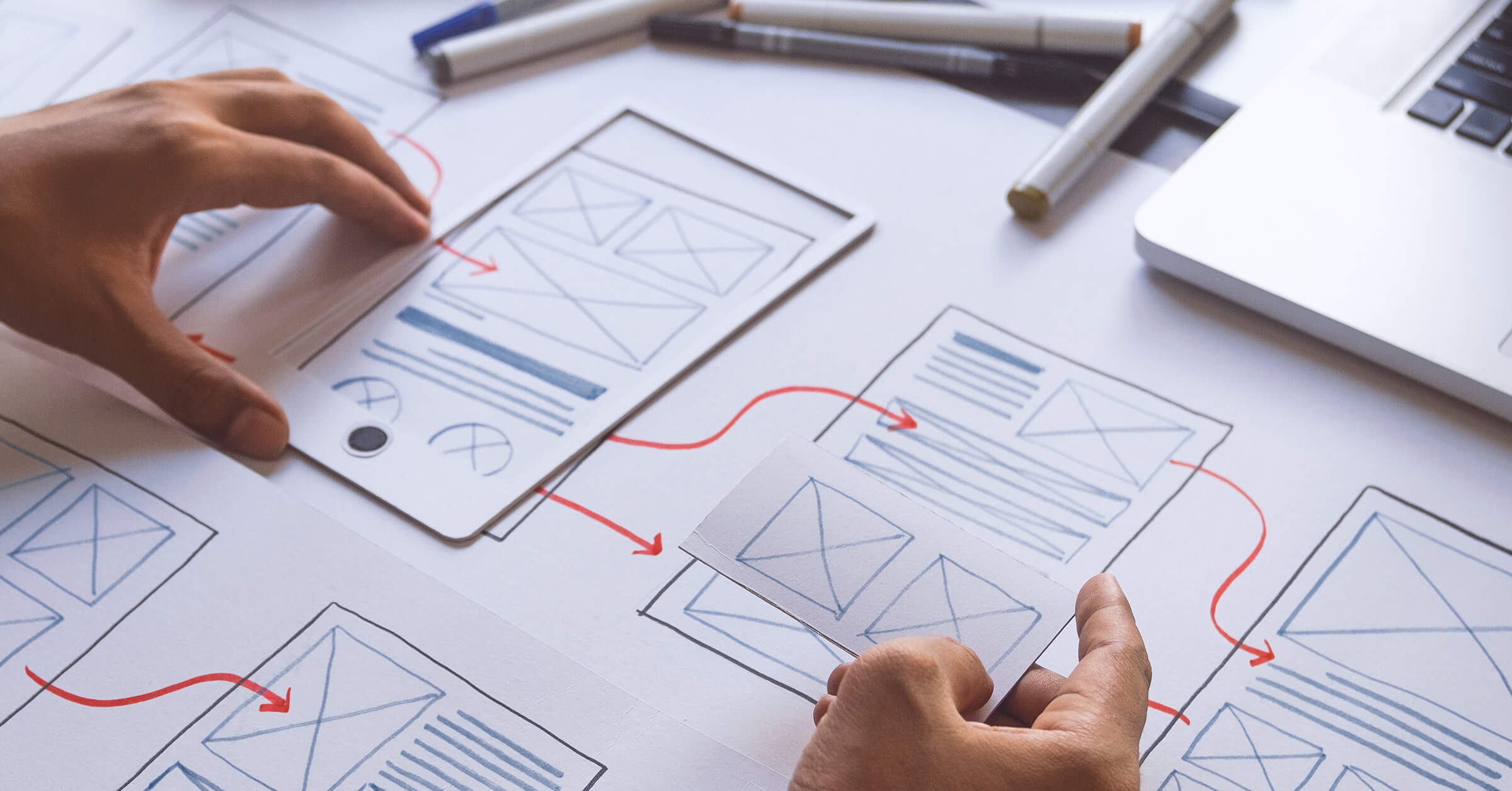
Custom landing pages for Google Ads campaigns are ultra-specific, dedicated pages that correspond directly to the exact service you’re pushing out with your ad.
At Spacefully, these landing pages are a key component of our proprietary process, and one of the most important ways for us to generate and measure success for our clients.
Having a custom landing page for your Google ad hones in on exactly and only the service that the searcher is seeking.
Instead of sending someone who searched for “meeting room rental” to your homepage, where they have to navigate through all your services, a custom landing page speaks directly to that specific search and guides them toward taking action.
Why Most Coworking Spaces Don’t Use Landing Pages (And Why You Should)
If custom landing pages are so effective, why doesn’t everyone use them?
The reality is that most coworking operators run their Google Ads traffic straight to their homepage.
That’s not because it’s the best strategy, but because they don’t have a dedicated place to send that traffic.
There are a few common reasons coworking spaces don’t use custom landing pages:
Technical Limitations
Creating and developing custom landing pages requires technical know-how and resources that not every coworking space has in-house. It’s more work than just pointing ads to your existing website.
They Don’t Know It’s an Option
Many operators simply don’t realize that custom landing pages are even possible. When they think about increasing meeting room bookings, their first instinct is to run ads to their meeting room page on their website, which seems logical, but isn’t optimal.
SEO Concerns
Some operators worry about duplicate content. If done improperly, having multiple pages on your website talking about the same thing can get penalized by search engines. This is a valid concern, but it can be managed with proper technical implementation.
The Real Cost of Not Using Landing Pages
Here’s what you need to understand: when you send paid traffic to your homepage, you’re asking people to do extra work.
They have to figure out where to go, what to click, and how to find the information they need.
Your homepage is a catch-all designed to serve everyone, which means it’s optimized for no one.
And when someone just paid to click your ad searching for a specific service, making them hunt for information is a conversion killer.
Why Custom Landing Pages Are Vital for Conversions
When you don’t have a custom landing page set up for your Google Ads campaign, you’re essentially making your visitor proactively seek information rather than just having it immediately available to them.
Custom landing pages provide them with the exact information they need and drive them directly to the way they can take action.
These landing pages also strip away a lot of potential distractions, such as navigation bars.
For instance, if you’re running a Google Ads campaign focused on virtual office services, you don’t want your visitor to get lost in other services, especially after you’ve already paid for their click.
Even things like Instagram feeds or member logos that lead to other websites can take people away from where you want them to be.
And while these things are really valuable to have on your website in general, you don’t want to pay for a Google Ads lead just to have them leave to another page without taking action.
They Eliminate Confusion
Here’s another critical advantage: custom landing pages let you speak your potential member’s language.
Google Ads tells you exactly what people are searching for.
If they’re searching “meeting room for rent” versus “conference room for rent,” there could be subtle differences in what they’re expecting. A custom landing page lets you use their exact language and meet them exactly where they are in their search journey.
This is especially important in the coworking industry, where terminology can be confusing.
Not everyone understands the difference between a hot desk and a flex desk, or a dedicated desk and a private office.
Using the same language your searcher used eliminates that confusion and makes them feel like they’re in the right place.
Honing in on that visitor and their immediate goal is crucial for driving conversions.

Want to see samples of our landing pages in action?
See the exact landing pages we use to help drive leads to Coworking Spaces everyday!
The ROI Case: When Landing Pages Pay for Themselves
If you’re on the fence about investing in custom landing pages—maybe you’d have to sacrifice some ad spend to get them built—here’s how to think about the ROI.
Let’s say a custom landing page converts at double the rate of your website. If that’s the case, it should pay for itself pretty rapidly.
But here’s something else to consider: you’re developing an asset.
When we deploy certain elements within a landing page (maybe we add social proof, curate better images, or craft a more compelling offer), our clients are welcome to take those elements and apply them to their website as well.
If we can achieve a higher conversion rate on the landing page, there must be a reason why. And those insights can be tested and applied across your entire digital presence.
So, while there’s an upfront cost to creating custom landing pages, the long-term value extends far beyond just your Google Ads performance.
You’re learning what resonates with your audience and what drives them to take action, and that knowledge is invaluable.
The Performance Data
We’ve seen this play out time and time again. When we run traffic to a client’s website initially (often due to budget constraints), the performance is typically not great.
Then we pivot to a custom landing page, and we see a significant jump in conversion rates.
The difference can be dramatic: we’re talking about conversion rates that can more than triple when you move from a general website page to a purpose-built landing page.
How to Create Conversion-Driving Custom Landing Pages
The landing pages that convert most effectively include a small amount of hyper-specific information and features.
The key word there is “small.”
You’re not trying to tell your entire story on a landing page. You’re trying to give people just enough to take the next step.
Think of it like a movie trailer: if your coworking space is the movie, your landing page is the trailer.
You want to give people just enough to get them interested, but not so much that they feel like they’ve seen everything.
The goal is to leave them curious enough to take action.
Custom landing pages also allow you to position your spaces or services in the best possible light.
Let’s say, for example, that you’re running a Google Ads campaign (or track, as we call them at Spacefully) for your meeting rooms.
You have six meeting rooms across two locations, which are in close geographic proximity to one another.
With a custom landing page, you can cherry-pick the best, most attractive, or most used of the six spaces as a sort of highlight reel.
Or, you can showcase the wide assortment of sizes and “best-for” uses that can fit the majority of people searching for a meeting room.
Essential Elements Every Landing Page Needs
What you show on your landing page is important, but what you’re trying to get people to do on that landing page is equally important.
High-Impact Call-to-Action
The single most important piece of the puzzle on your custom landing page is your offer (aka your call-to-action).
If you’re like most coworking space operators, your website has some combination of “Contact Us” and “Book a Tour” forms that apply broadly to all of your services.
But when you’re spending money on a Google Ads campaign which is focused on a specific service, you want to pay for leads for exactly and only that service.
And the call-to-action or next step you want your visitor to take can differ vastly from service to service.
For example, if it’s an office space lead, you may want them to come in for a tour or to send them availability and pricing.
On the other hand, if it’s a lead for a meeting room, you may want them to book it directly or gain access to a calendar of availability.
Or if it’s for virtual office services, you may simply want them to buy now since the barrier to entry is relatively low.
Your custom landing page allows you to direct your visitor to the exact action they want to take and you want them to take once they’ve explored your service sufficiently.
Imagery and Photography
When it comes to images on your custom landing page, you’ll want to be selective and deliberate.
High-quality photography is one of the most powerful tools you have for driving conversions on landing pages.
In fact, we’ve run tests where we compared four different hero images side-by-side in an A/B test, and the winning image beat the runner-up by 47%.
That’s a massive difference driven by a single image choice.
You’ll want to use images strategically to showcase your space in the best possible light.
Think of it like a highlight reel: you’re curating the best photos that represent what someone searching for your service wants to see.
Information and Copy
You’ll want to include concise and compelling copy to articulate:
- Whether your space or service are a fit for your visitor
- Availability and pricing (or at least pricing indicators like “starting from”)
- Amenities that set you apart from competitors
Remember: make the decision as easy as possible. People know what they’re looking for from the Google search. Your job is to show them you have it and make it simple for them to take the next step.
The Submission Form
If your landing page conversion relies on a form submission, pay close attention to the form itself. Small issues here can make a big difference.
If a dropdown doesn’t have the option the person is looking for, they might bounce. If the form is too long and asks for too much information, they might abandon it. If the form fields are unclear or confusing, they might leave.
Likewise, having broken forms or buttons not working can contribute to a bad user experience and brand image. This becomes an issue more than you might think.
Keep your forms as short as possible while still collecting the information you actually need. Every additional field you add is another opportunity for someone to reconsider and leave.
How Much is Too Much? Finding the Right Balance with Your Landing Pages
One of the most common mistakes we see is landing pages that try to do too much. They’re packed with information, multiple paragraphs of text, and dozens of images.
Here’s a good rule of thumb: if you have three paragraphs in a single section, you’re probably overdoing it. You most definitely might be overdoing it.
At that point, you’re better off sending traffic to your website because a landing page is supposed to be clear-cut information that’s easy to scan and digest.
Nobody’s trying to read anymore. Your landing page needs to spoon-feed information in a way that’s immediately understandable.
The Three-Picture Rule
Here’s a practical guideline for imagery: have a slideshow or image gallery, but limit it to three pictures per section—especially if it’s for your primary service.
If it’s an amenity, one picture is usually sufficient.
The goal is to give them enough so that you’re leaving them wanting more. That’s what’s going to push them to click “book a tour” or submit a form.
You’re not trying to show them everything. You’re trying to spark enough interest that they take action.
Make It Interactive Without Being Overly Dynamic
Your landing page should feel engaging, but it shouldn’t be so busy that it distracts from the primary goal: conversion.
Use slideshows, yes. Use high-quality images that tell a story about your space. But keep it focused. Every element on the page should be driving people toward your call-to-action.
How to Track and Measure Landing Page Effectiveness
Without a doubt, one of the biggest reasons to create custom landing pages for your Google Ads campaigns is that they give you a ton of valuable insights.
And this is where we’re really able to help coworking space operators get the most out of their Google Ads spend.
The Trackability Advantage
The trackability of your custom landing page is huge.
If you do split tests on your website, for example, it’s nearly impossible to know what’s really been happening.
You might see a traffic or leads uptick as a result of social media or an email marketing campaign, or possibly someone hosted a large event, and attendees wanted to find your location.
It’ll be hard to distinguish between these audiences and can produce uninterpretable results.
On the other hand, your custom landing page is exclusively for your Google Ads, so you’re able to see exactly where your leads are coming from and target your page directly to high-intent searchers who are most likely to become customers (as opposed to just general traffic).
Your custom landing page will allow you to track a ton of metrics directly from your Google Ads campaign, including:
- Form submissions
- Phone calls
- Tours booked
- Outbound link tracking
- Chats initiated
To avoid manual entry and human error, we also help our clients pipe these leads directly into your CRM.
Pro Tip: Leverage the power of automation by creating an automatic email sequence to send timely information to new leads. Many popular CRM’s and coworking software allow you to create follow-up sequences to put your follow-up on autopilot.
Prefer a more manual approach? Have your CRM set up tasks for you instead of sending an email. This way, you can add a personal touch to every interaction.
Testing Your Landing Pages for Maximum Performance
You can (and should) experiment with landing pages by running split tests to see which iteration performs better.
What to Test on Your Landing Pages
For instance, you can run two variations of the same landing page at the same time to determine which one performs better based on a set of variables, which typically include:
- Design
- Copy
- Visuals
- Call to action
We run these tests and begin to look for trends and patterns over time.
If you only have your regular website data available to you, it’s much more difficult to quantify what works and what doesn’t.
Focus on Above-the-Fold Content First
When you’re testing landing pages, above-the-fold content is one of the biggest levers you can pull to move the needle on conversions.
Above the fold is where you have your hero banner, your highest-impact CTAs, and the content that hooks people and drags them further down the page.
There are a few things that are key to test here, including:
- Copy
- Imagery
- CTAs
Here’s the thing about landing page design: it’s subjective.
If you gave 20 people the task of creating the best landing page for your space, you’d get 20 different versions, and nobody would be able to definitively say which one was best without testing.
Your personal opinion about what looks good or what copy sounds compelling doesn’t matter nearly as much as what actually drives conversions with your target audience.
That’s why testing is so critical. Your personal preference doesn’t matter nearly as much as what actually performs with your target audience.
The Spacefully Approach to Testing Landing Pages
We typically do side-by-side A/B testing quite a bit. We limit changes to one or two major variables so we can clearly see what’s making the difference.
Sometimes we’ll even run A-B-C or A-B-C-D tests where you have multiple variants running simultaneously. That’s less common, but it depends on the use case and what we’re trying to learn.
The 888 Rule
We use what we call the 888 rule for determining when a test has run long enough to draw conclusions.
Basically, we measure for a specific amount of time—let’s say eight weeks—or until we hit about an 80% confidence rate in the results. That usually tells us that something is performing significantly better.
But you also need to use your judgment. You need to review the data holistically and see exactly what it means for the landing page and what it means for the service you’re trying to improve. That will tell you which variation is the true winner.
Going Beyond Conversion Rate: Optimizing for the Right Leads
Here’s something important to understand: while conversion rate is obviously something we try to continuously push upward, a lot of our landing page experiments are actually more goal-oriented than conversion-rate-oriented.
What does that mean?
Let’s say you’re running a space that’s sold out of one- and two-person offices, but you’re looking to generate leads for larger team suites. You might create a landing page focused exclusively on team suites.
Your conversion rate might actually go down compared to a landing page that promoted all office sizes. Why? Because there are simply fewer people searching for team suites than one-person offices.
But here’s the thing: every single lead you generate is now a perfect fit for what you actually have available. You’re getting fewer conversions, but every one of them is qualified and actionable.
So while conversion rate is a measure of performance, it’s not the only measure. We take into account what the current goals are for each individual space to see how we can shape the leads to be better qualified for them.
If it makes dollars, it makes sense, even if the conversion rate is lower.
If you’re running Google Ads campaigns, creating custom landing pages is one of the savviest things you can do. It offers you real-world quantifiable metrics, so you’ll get a lot more insights and do a lot less guessing.
Not only will you be able to tweak your Google Ads campaigns and landing pages for optimal results, but you’ll also get a clear, no-nonsense understanding of your ROI.
If you want to harness the power of Google Ads and custom landing pages to start bringing new members into your coworking space today, we’re here for you. We use our industry-specific expertise to help coworking spaces attract new qualified leads.
Learn how we can supercharge your lead generation by signing up for our Google Ads Blueprint today.


