
When Google’s ‘Help’ Costs You Thousands: How Alkaloid Networks Recovered from a Rep’s Bad Advice
Our case studies showcase how coworking space operators around the globe use industry-specific Google Ads strategies to fill their locations, generate revenue, and create waitlists for their services.
- Meet Katharine Chestnut: A Career Marketing VP Turned Coworking Space Operator
- Turning Accidental Success Into Intentional Growth with Alkaloid Networks
- Building a Marketing Strategy That Actually Worked for Her Space
- How One Phone Call with a Google Rep Destroyed Months of Progress
- Why Even Marketing Experts Know When to Ask for Help
- How Katharine and Spacefully Went About Fixing What Google Broke
- How the Right Partnership Now Helps Keep Alkaloid Growing
- A Warning for Every Coworking Operator Running Google Ads
Meet Katharine Chestnut: A Career Marketing VP Turned Coworking Space Operator
Katharine Chestnut didn’t plan to become a coworking space operator.
After 30 years as a VP of Marketing Strategy for Fortune 50 and Fortune 100 companies, she left the corporate world behind. She’d spent decades traveling, developing marketing strategies for massive organizations, and managing teams of analysts.
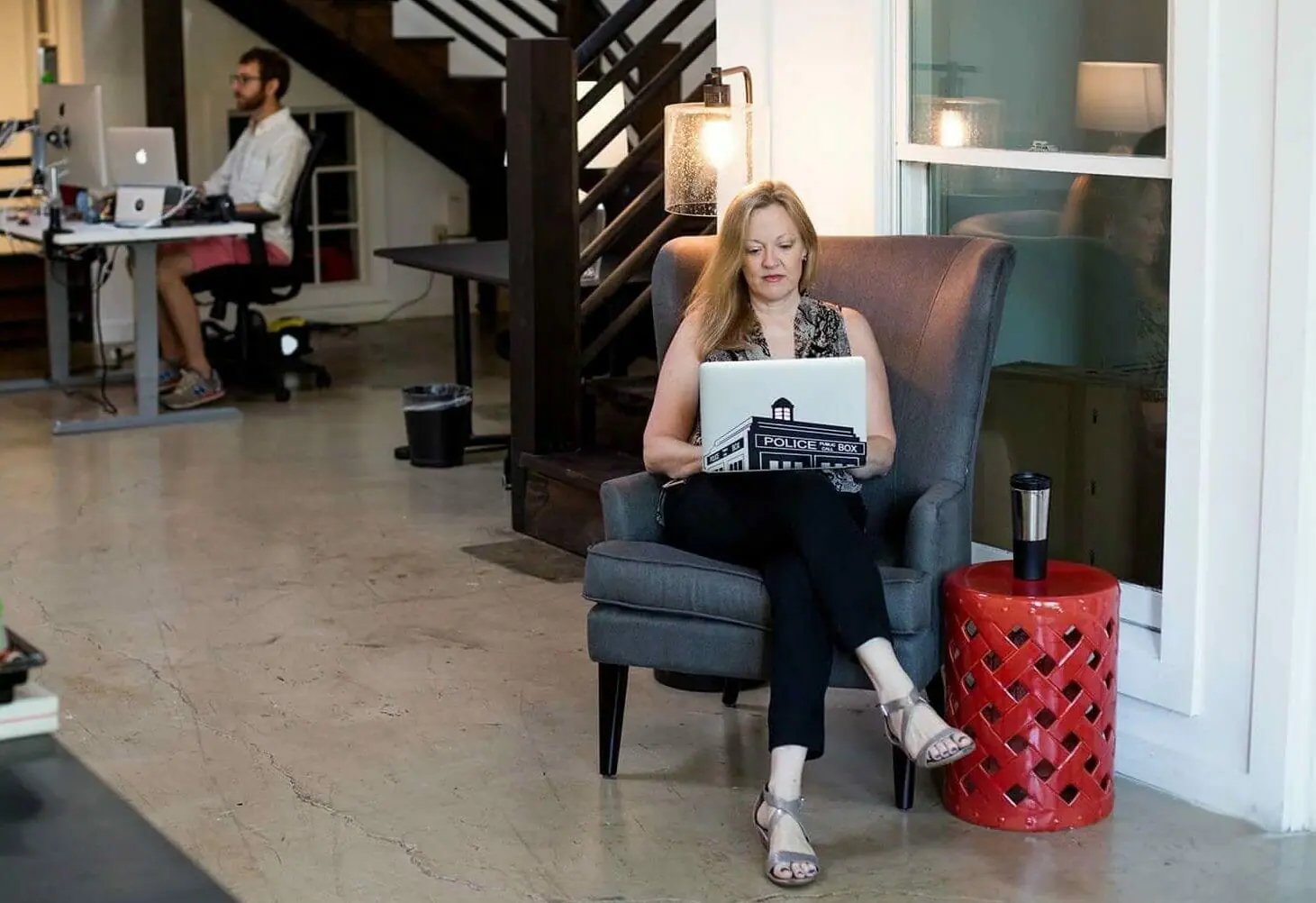
In early 2015, she found herself needing an office space for another business she was building. She wanted something close to her home in Atlanta, ideally near the Eastside Atlanta Beltline, which was a major draw in that market.
The space she found was 4,000 square feet. It was far bigger than she needed, but she figured she could use part of it and rent out the rest as coworking space.
There was just one catch: she had no brand, website, or business plan. She just listed the space and started renting desks.
Katharine admits, “I had no idea what I was doing. No kidding, none at all.”
Still, she filled it in two months using Craigslist.
“That’s when the light bulb went off,” Katharine says. “I realized, oh, this is actually a thing.”
Turning Accidental Success Into Intentional Growth with Alkaloid Networks
Katharine put her marketing hat back on. She built a brand, created a website, and defined a mission and vision.
She also spent a couple of years figuring out her sweet spot: remote workers, solo entrepreneurs, and micro businesses.
During that time, she grew Alkaloid Networks from 4,000 square feet to 15,000.
While attending a GCUC Conference, she heard someone say that coworking operators are creating an experience for members, not just providing desks and WiFi.
“When I heard that, a light went off over my head because my background was in experiential marketing,” Katharine says. “I realized, no wonder this is working for me so well.”
Everything Katharine does comes back to one question:
How does this benefit the members?
“In everything I do here, I ask two main questions,” she shares. “What is the member experience going to be, and how does this enhance the community? Everything always comes back to that.”
Building a Marketing Strategy That Actually Worked for Her Space
As Alkaloid grew, Katharine needed a consistent way to generate leads.
She did her research, figured out how people were finding her, and started running Google Ads herself.
“Honestly, this was not my area of expertise,” Katharine admits. “But I didn’t suck too bad at it at first.”
She even worked with Google’s support reps a few times. And for about six months, she had one rep who actually helped her dial things in.
It was working great: quality leads, controlled budget, and the right people finding her space.
Then one October, out of the blue, Google rotated to a new rep.
How One Phone Call with a Google Rep Destroyed Months of Progress
Google rotates the representatives assigned to your account every quarter. Katharine had gotten used to this, but her newest rep suggested some changes to “optimize” her account.
Katharine was cautious.
She knew Google’s job was to sell ads, but the campaigns had been working well for months. So, she trusted the advice and made the changes.
Big mistake.
October and November are slow months for coworking, so when Katharine noticed her leads dropping, she figured it was seasonal.
Then January hit. This is the time when coworking spaces should be flooded with tour requests.
Instead, her tour calendar was empty, and her ad budget had doubled.
“When things should have been off-the-chain busy in January, and my budget had doubled, I was furious,” Katharine says. “I should’ve had tours coming out of my ears, but I didn’t. I’ve been tracking conversions for over 10 years. I close a quarter of people who come in for a tour, but at this point, I wasn’t getting tours at all.”
She called Google and explained, “Whatever we did has broken things.”
They insisted everything was fine.
But Katherine knew better. Her tracking—if and when she could trust it after the changes—told a different story.
The Google rep’s adjustments had broken her conversion tracking, so clicks were showing up as conversions, making it look like campaigns were performing when they weren’t.
The data said everything was working. Reality said otherwise.
“I was bleeding money,” Katharine says. “I don’t have deep pockets like the big corporate place down the street. I didn’t know what to do.”
For months, she watched money vaporize while trying to figure out what went wrong.
Why Even Marketing Experts Know When to Ask for Help
Around that time, Katharine saw a conversation between Cat Johnson and Reuben Lau from Spacefully.
So, she set up a call with the Spacefully team.
“I knew Google Ads was not an area of expertise for me,” Katharine explains. “And when I was in the corporate world, I’d hire people to handle things I wasn’t an expert in.”
She adds, “I don’t mind doing the work. It’s a question of hiring somebody who knows their job better than I know their job. And, in this case, I paid the dumb tax to Google for far too long.”
How Katharine and Spacefully Went About Fixing What Google Broke
After kicking off her engagement with Spacefully, Katherine was connected with Abdullah Idrees, our Google Ads specialist, and he got to work diagnosing what had gone wrong.
“He had it fixed really fast,” Katherine says.
For Abdullah, the problems were clear.
First, we disabled the Auto Apply Recommendations that were spending Katherine’s budget on the wrong things and took back manual control.
Next, we fixed the broken tracking so Katherine could see real leads instead of inflated click counts.
The broad search terms bringing in irrelevant traffic were replaced with a refined keyword strategy focused on high-intent searches from remote workers, solo entrepreneurs, and micro businesses looking for workspace in Atlanta.
We rewrote the ad copy to clearly communicate what Alkaloid offers and why it’s different.
And instead of running both Search and Performance Max campaigns, we focused the budget on what was working: Search campaigns that captured high-intent traffic.
Within months, Katharine’s campaigns were back on track.
How the Right Partnership Now Helps Keep Alkaloid Growing
Today, Katharine’s Google Ads do exactly what they’re supposed to do.
“I spend the right amount every month,” she says. “There are no more surprise overages and no more bleeding money on irrelevant clicks.”
More importantly, she’s getting quality leads again, with current performance including:
- ~8 form submissions per month on a $600 budget
- 8.33% conversion rate, which is well above industry standard
- 25% tour-to-member close rate, a figure Katharine’s tracked for 10+ years
- One-third of all conversions come from Google Ads
That last number is what matters most.
“A third of the leads that convert now come from Google Ads,” Katharine says. “That is money well spent. It’s not just people coming in, it’s knowing that’s where a large part of my converting leads are coming from.”
The value to Katharine isn’t just about the numbers, though. It’s also about the partnership.
Every month, Abdullah sends Katherine a report and asks what happened with the previous month’s leads. She gives feedback. He mentions tweaks or changes he’s considering. They adjust together.
“It’s not fix it and forget it with Spacefully,” Katharine explains. “It’s a collaborative effort. I appreciate that Abdullah’s watching so I don’t have to.”
When her offices are full, we shift focus to desk memberships. When she has openings, we adjust again.
The strategy responds to what’s actually happening in her business.
And it frees Katharine up to do what she does best: create an exceptional member experience.
“Abdullah is my awareness guy,” Katharine explains. “I do the converting. That gives me more time to spend with my members.”
A Warning for Every Coworking Operator Running Google Ads
If you’re thinking about DIY Google Ads, or if you’re working with Google reps, Katharine has a word of advice.
“You might get a great Google rep to help you, like I did for the first little while, but then you might not,” Katharine says. “Google’s in the business of selling ads. That’s what you have to remember. I was very cautious when talking to the reps because I know this. I went in eyes wide open. That is their job.”
Despite this awareness paired with 30 years of marketing experience, things still went awry.
“If you have a coworking community, you don’t have time to babysit Google Ads,” Katharine says. “You should be talking to your members and building community instead.”
For Katharine, the decision to enlist help came down to a simple cost-benefit analysis.
“The cost is reasonable,” she says. “I would much rather pay Spacefully than bleed money to Google. The quality of leads is far superior.”
Alkaloid Networks continues to thrive today. The space continues to serve the Atlanta community with the experience-first approach Katharine built from day one.
And her Google Ads? They’re working the way they should have been all along.
If you’re struggling with Google Ads, whether you’re doing it yourself or working with reps whose first priority is to look out for Google, you don’t have to keep burning your time or money.
At Spacefully, we specialize in Google Ads for coworking spaces. We know what works, what doesn’t, and how to fix what’s broken.
Ready to stop paying the dumb tax and get your Google Ads working the way they should? Book a free introductory call to learn how we can build a strategy that delivers quality leads without breaking your budget.


