
5 DIY Photography Tips to Help Coworking Spaces Boost Conversions
Updated: January 28, 2026
They say a picture’s worth a thousand words, and this is especially true when it comes to Google Ads.
Your photos showcase the attractiveness and key differentiators of your space. And, most importantly, they help prospective members connect with the space they’ll be touring–and maybe even working from.
In fact, great imagery helps your Google Ads perform better and can even increase your conversion rates.
But there’s a caveat: in order to have the desired effect, your photos need to be high-quality, and that doesn’t just apply to their resolution. It also encompasses what you include in the photos, as well as where and how you use them.
You don’t have to be a professional photographer to take incredible, sales-driving pictures, though. Just follow this quick guide we’ve created to help you take top-tier photos of your coworking space.
- 4 Common Ways to Use Photos of Your Coworking Space in Google Ads
- Why Photography Matters for Coworking Spaces
- The Best Image Formats for Your Coworking Space
- Understanding the Two Types of Coworking Photography
- 5 Tips for Taking Better Photos for Your Coworking Space
- A Quick Photography Checklist for Coworking Spaces
- Quintessential Photography Do's and Don'ts
- How to Test Your Photos' Performance
- A Note on AI-Enhanced Photography
4 Common Ways to Use Photos of Your Coworking Space in Google Ads
Before we dive into the “how,” let’s explore the “what” and “why” of taking great photos for your coworking space.
First, it’s important to understand the few common ways to leverage high-quality photos with your Google Ads to help drive conversions for your coworking space.
Here are four of them.
Ad Extensions
In Google Ads, extensions are extra bits of information you can show alongside your ads. They can contain links to specific subpages on your webpage, a call button, product pricing information, and more.
Google often uses photos to entice searchers to click on specific ads, and high-quality pictures help increase the odds of your ad getting clicked.
Display Ads
Display ads are ads that are shown on the articles, videos, or websites that consumers browse. With Google Ads, you may serve your ads on the Google Display Network, a collection of over two million websites that reach over 90% of Internet users across the globe.
Just like with Ad Extensions, high-quality imagery of your space can make your Display Ads significantly more appealing to your potential members.
Discovery Ads
Discovery ads help you reach people who are ready to discover and engage with your brand. They’re displayed automatically on YouTube Home and Watch Next feeds, Discover, and the Gmail Promotions and Social tabs using a single campaign.
Landing Pages
At Spacefully, we use custom landing pages for Google Ads campaigns. These ultra-specific dedicated pages correspond directly to the exact service you’re pushing out with your ad.
Having a custom landing page for your Google Ad hones in on exactly and only the service that the searcher is seeking.
Having high-quality images pertaining to the service you’re advertising can help increase conversions significantly. In fact, in an experiment where we tested four banner image side-by-side in an A/B test, we found that the champion beat the runner-up by 47%.
Beyond Google Ads, high-quality photos can also be used for other marketing purposes, such as:
- Your website
- Exterior signage
- Social media
- Email marketing
- Blog content
- Video content
- In apps
So, suffice it to say, you should be putting an emphasis on capturing high-quality photo assets.
Why Photography Matters for Coworking Spaces
Let’s be direct: as a coworking operator, you’re selling an experience.
Unless you’re exclusively offering virtual mail or phone answering services, you need people to want to be in your space physically.
And the first way they experience your space, before they ever set foot inside, is through your photography.
Great visuals are often the first thing potential members absorb when they land on your ad or your landing page. Before they read a single word of copy, they’re looking at your images and making snap judgments about whether your space is right for them.
If you load any webpage and look at it for just three seconds, it’s hard to remember all the calls to action or even the text.
But that image? That’s what sticks with you.
The longer someone stays on your page looking at your photos and imagining themselves working in your space, the higher the likelihood they’ll convert.
Whether that’s booking a tour, filling out a form, or calling your space, compelling photography moves people through your funnel.
And here’s another consideration: people searching for office space often have a longer sales cycle.
They’re not making a decision overnight. If they’re seeing the same image again and again as they research options, refreshing your photography periodically can give them something new to engage with and potentially improve your conversion rates.
The Best Image Formats for Your Coworking Space
Before you start taking photos, it’s helpful to understand the technical specifications that will make your images usable across multiple platforms.
When it comes to taking photos for your coworking space, the two most common formats are square and rectangular.
For each, make sure you follow these optimal image specifications:
- Rectangular images: Aspect ratio of 1.91:1 with a minimum of 600 x 314 pixels
- Square image: Aspect ratio of 1:1 with a minimum of 314 x 314 pixels
But which one is the best option for your Google Ads campaigns?
As a rule of thumb, Google generally serves square images for search ads and rectangular ones for extension ads.
However, we’ve noticed Google doing two new things more and more lately:
- Increasing its use of rectangular images across various ad types
- Utilizing a new format that uses three square images formatted into one rectangular image
So, with that in mind, it’s wise to take photos that can be used in both formats and to build up an archive of image content to draw from.
Understanding the Two Types of Coworking Photography
Before you start snapping photos, understand that there are generally two styles of photography that work well for coworking spaces: real estate photography and lifestyle photography.
Each serves a different purpose in the buyer journey.
Real Estate Photography: The Wide Open Canvas
This style features wide-open shots where everything is straight, aligned, and neat.
Think of it like the photos you’d see in a real estate listing: clean, polished, and showing every square inch of the space.
Real estate photography works best when potential members are getting into the details of product selection.
If someone is deciding between Office A and Office B, wide-angle real estate shots let them see the full layout, whether it’s a corner office with windows or an interior office without natural light.
Meeting rooms are another great use case for this style. Wide shots can show how the space can be reconfigured for different uses: training sessions, seminars, round-table discussions, or presentations.
Lifestyle Photography: The Lived-In Experience
Lifestyle photography is more close-up and experiential. It shows people interacting in the space, gives you a sense of the vibe and energy, and helps potential members imagine what it would actually feel like to work there.
This style is less about showcasing every detail and more about communicating the atmosphere and community. You’re not trying to document the space, you’re trying to sell the experience.
Which Style Should You Use?
We typically lean on lifestyle photography more often than not. It’s more engaging, more emotionally resonant, and better at communicating what makes your space special.
But there are specific moments when real estate photography shines:
- When people are at the product selection stage
- When you want to show how a meeting room can be configured
- When someone is at the final decision stage and wants to see every detail before committing
The best approach? Have both styles in your arsenal so you can use the right type of photography for the right moment in the buyer journey.
5 Tips for Taking Better Photos for Your Coworking Space
With all of that in mind, it’s time to pick up your camera (or hire a photographer to pick up theirs) and start snapping shots.
Whichever avenue you choose, here are five considerations to keep in mind that will help you take conversion-driving photos you can use for your Google Ads and beyond.
1. Don’t Forget to Take Exterior Photos
It’s common to see coworking space operators take a ton of stunning photos from inside the space, but exterior photos are all too often neglected.
This is a big missed opportunity.
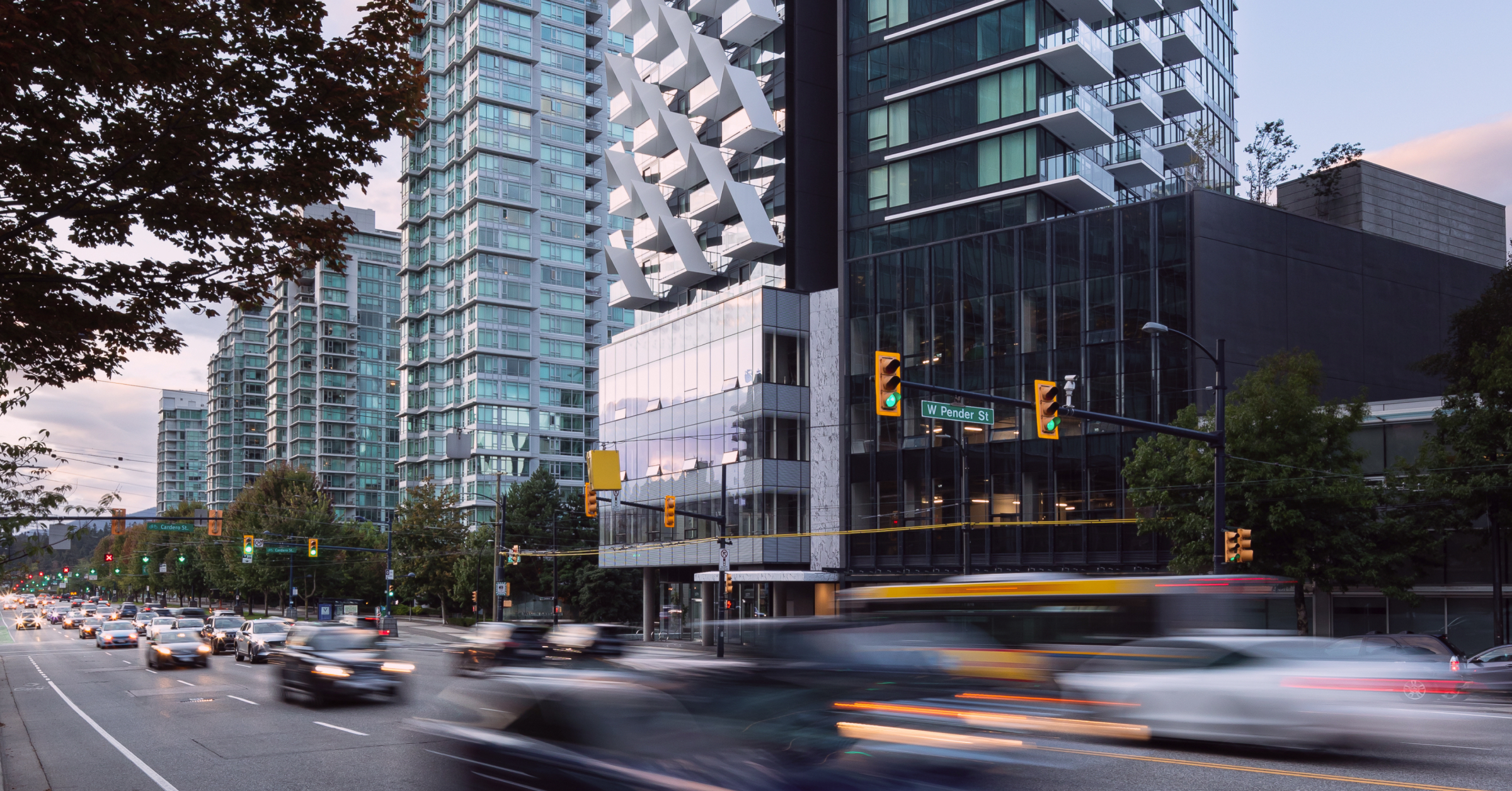
Front door pictures are great for “Book A Tour” calls to action, and exterior building shots can help people who are familiar with the area to instantly understand where you’re located.
You can also take a few steps inside your front door and snap some photos of your front desk and reception areas to convey a sense of welcome for prospective members.
And-Co, located in Vancouver, Canada, has done a great job capturing images from the exterior of their iconic building and leveraging them in their marketing efforts.

2. Include People in Your Photos (But Keep It Natural)
Your space itself is incredibly important, but it’s the community within your walls that ultimately brings the space to life.
That’s why it’s important to ensure you take some photos that include people.
For one, our eyes are naturally drawn to people in photos. But most importantly, it helps bring that key human element of your space to the forefront.
Here’s the key:
The people in your photos need to look natural.
One more time to really drive this home: people in your pictures need to look natural.
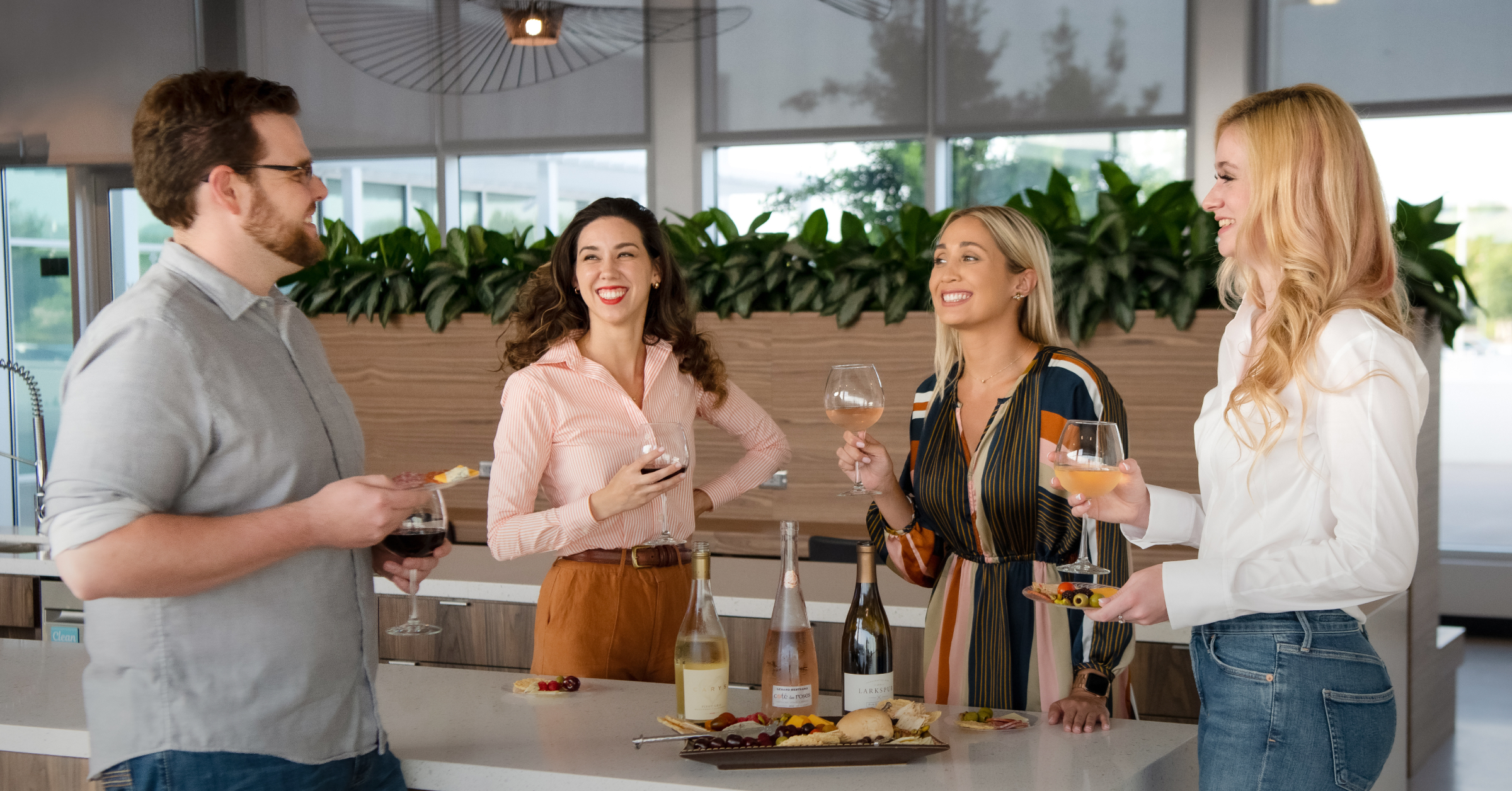
Don’t stage a “one, two, three, cheese!” moment where everyone’s awkwardly posing. Instead, capture people actually working, collaborating, or engaging with the space in authentic ways.
If possible, try to leave an empty seat in view in your photos so that people can picture themselves in the space.
Venture X taps into their community in many of their photos, and it helps illustrate the energy and experience that members will enjoy when they step into one of their spaces.

3. Zoom Out
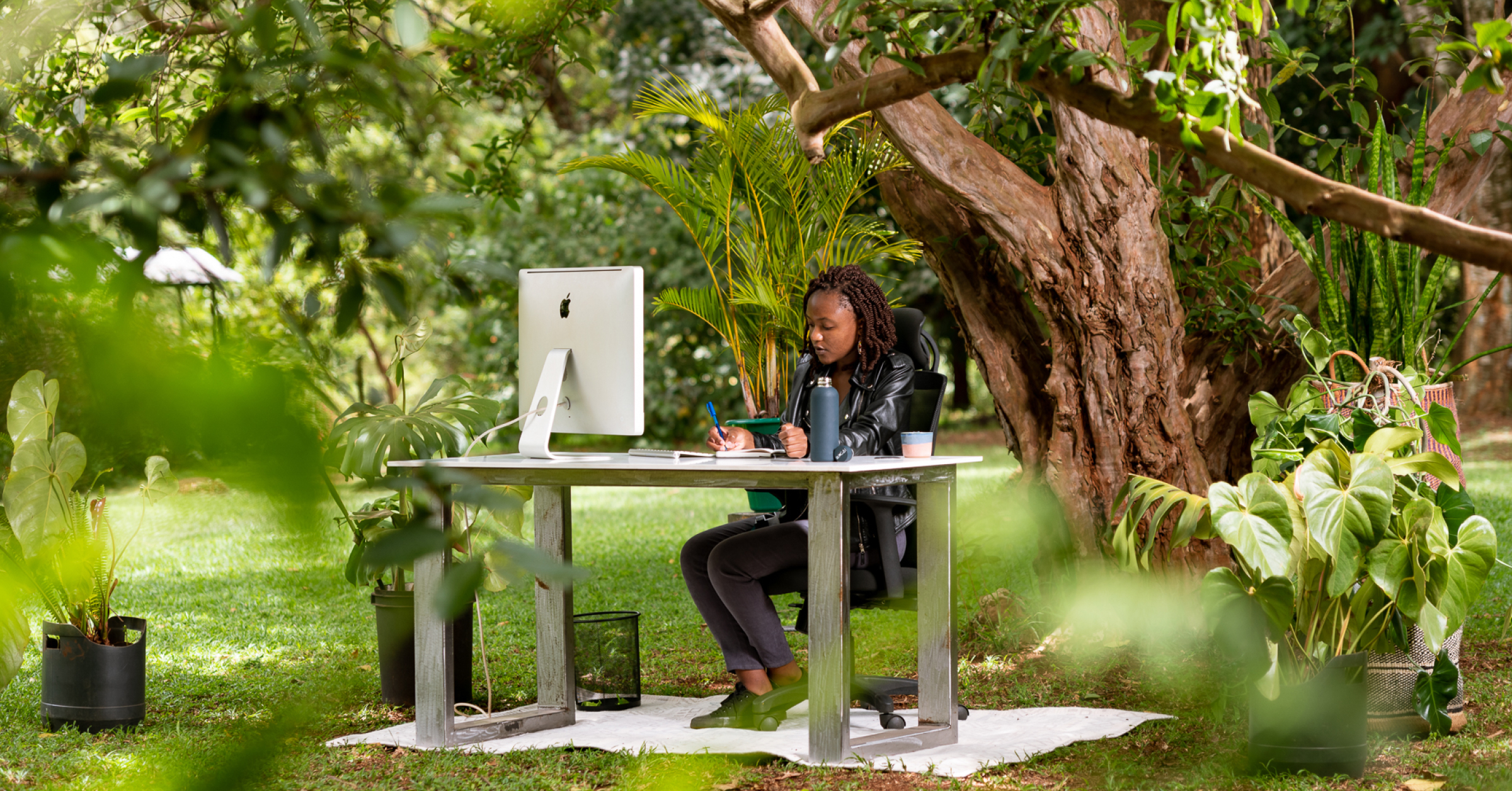
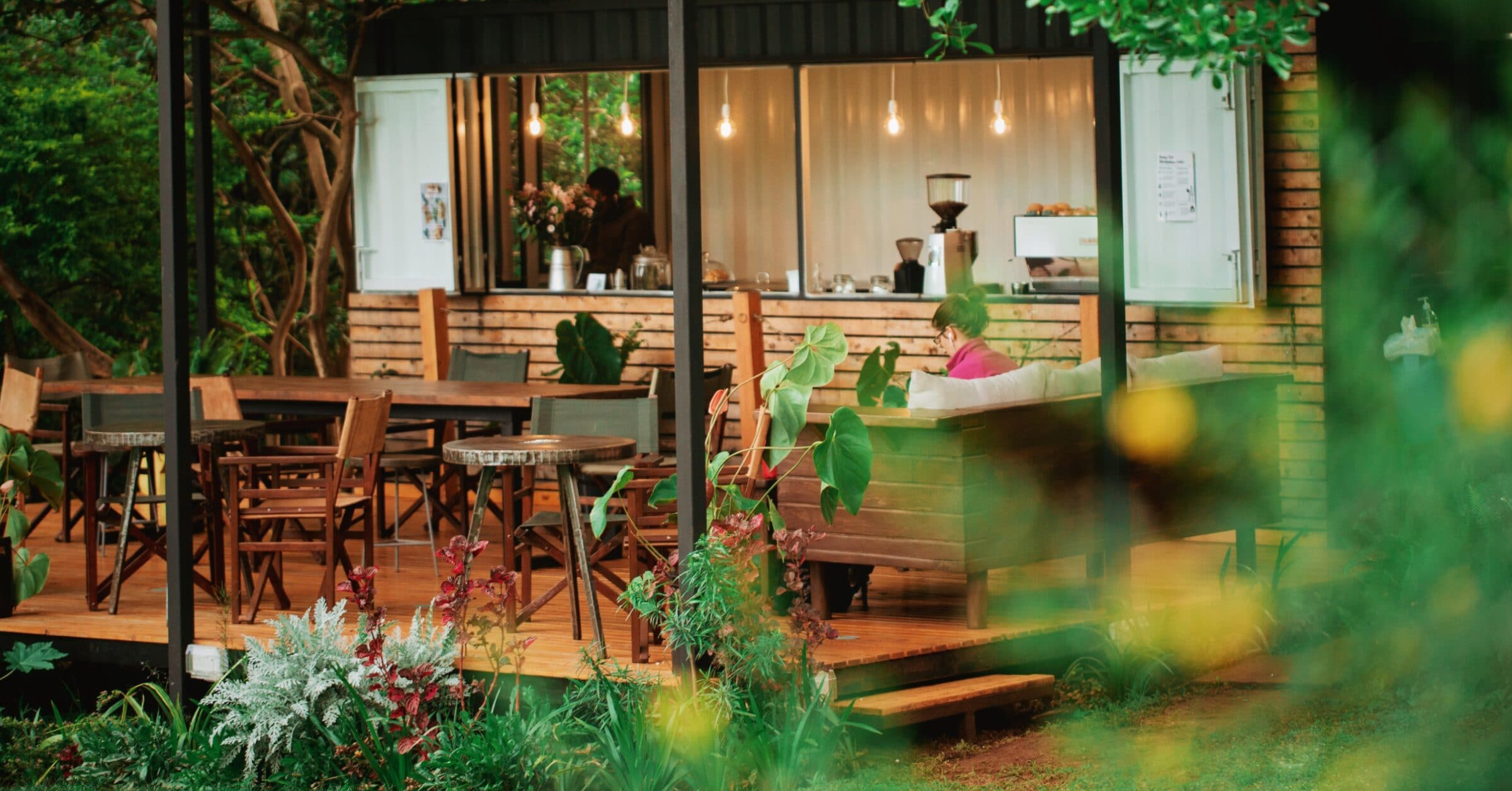
It might feel counterintuitive to take photos in which your coworking space isn’t perfectly framed front and It might feel counterintuitive to take photos in which your coworking space isn’t perfectly framed front and center, but doing so actually allows for the image to be cropped and adjusted for various viewing aspect ratios and angles.
In reality, photos will rarely be used in the exact dimensions and ratios as they’re taken by the camera (such as 4:3 or 3:2), so allowing space to crop inwards from any direction allows your image assets to be more broadly utilized.
If you’re looking for a great example of how to do this, check out this shot from Ikigai Coworking in Kenya.
4. Capture Team Portraits (And Extend the Offer to Members)
The team that runs your coworking space can be one of the most important aspects of its culture, community, and the experience people enjoy while working there.
Taking team photos and individual portraits can help people become familiar with your space’s ownership and staff, in turn reinforcing valuable personal connections.
Your portraits can be used on your business cards and email signatures, among many other applications.
You can even make this a member perk by offering professional headshots while you have a photographer on-site.
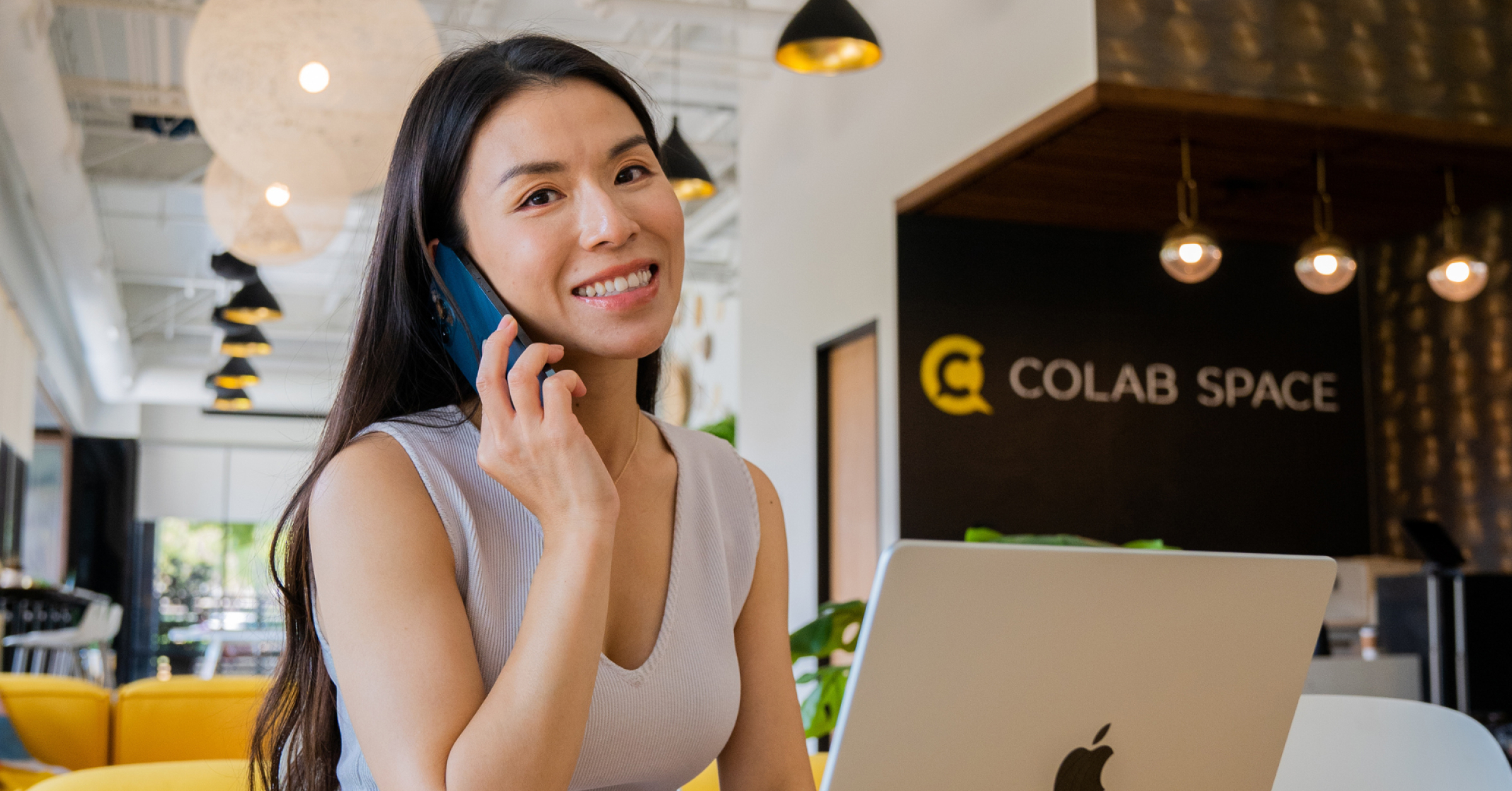
The team at The Colab Space in Orange County has taken some incredible team photos that they’ve used across multiple different applications.

5. Use Photos like Adjectives
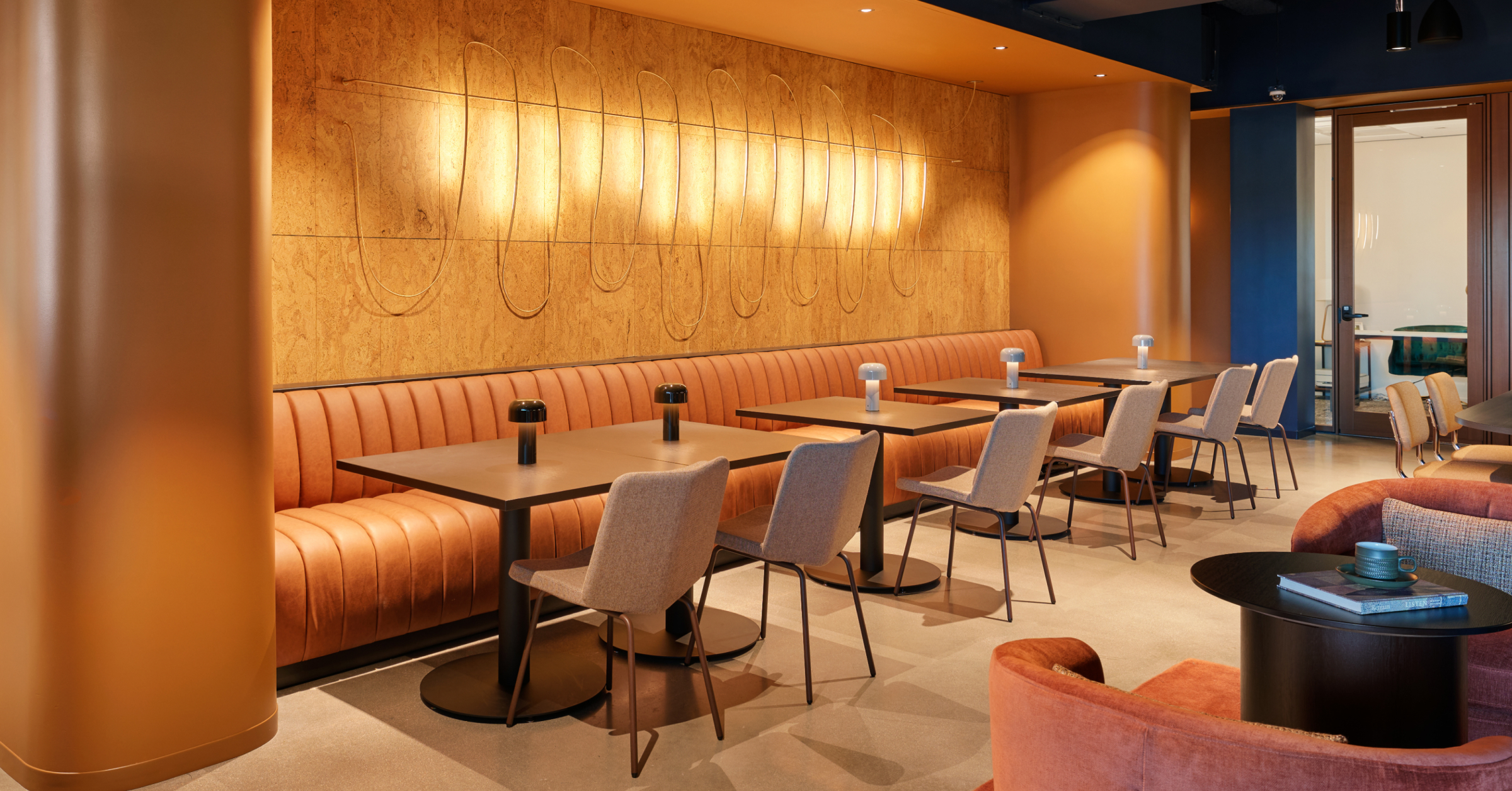
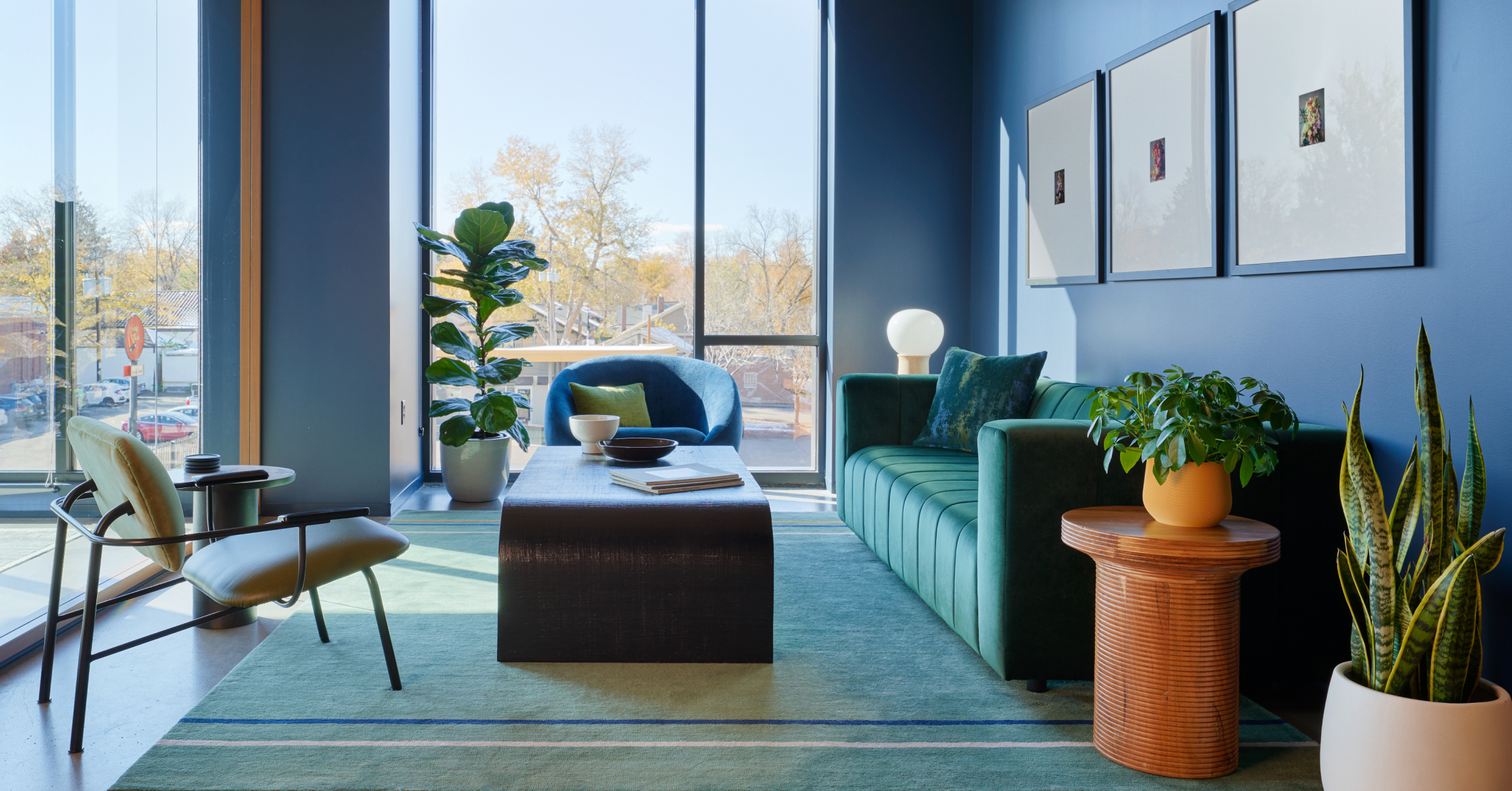
This might sound odd, but you can use your photos to reinforce the adjectives you use to describe your space.
Rather than just talking about it, try to show it: for instance, if your space features a mid-century modern design, capture shots of the furniture or elements that encapsulate this style.
For example, Terra Coworking in Denver, Colorado, perfectly captures its boutique spirit with the imagery it showcases in its Google Ads.

Pro Tip:
Make it obvious. Don’t use some obscure image to depict your services. Instead, find an image that best represents some of your most common search terms. Feeling unsure? See what Google thinks about your image using their Vision API.
A Quick Photography Checklist for Coworking Spaces
When you’re deciding what to photograph, put yourself in your potential member’s shoes.
What’s on their mental checklist when they’re evaluating your space?
Here are the key things they’re looking for, and what you should be capturing in your photos.
Capacity
How many people can fit in this office? If you’re advertising a three-person team suite, make sure your photos clearly show a three-person setup. Don’t send photos of a one-person office when someone’s looking for team space.
Amenities
What does your space offer that others don’t? If you have ergonomic chairs, show them. If you have adjustable standing desks, capture someone using one. If you have a beautiful coffee bar, don’t just say you have coffee. Show what that experience looks like.
Think about it this way: if someone’s moving into a furnished office space, those ergonomic chairs and adjustable tables help them visualize themselves in that environment.
Pricing Indicators
While you might not show exact pricing in photos, your imagery should communicate value. If you’re a premium space, your photos should reflect that level of quality. If you’re positioning as accessible and affordable, your photos should feel welcoming rather than intimidatingly luxurious.
Location and Exterior
Show what your building looks like from the outside. Remember, many of your members will use this as their business address when connecting with their own clients. They want it to look presentable and professional.
The Rule of Three
Here’s a practical guideline: when creating slideshows or image galleries for your primary service (like private offices), limit yourself to three pictures per section.
This gives potential members enough to understand what you’re offering without overwhelming them.
For amenities, one strong photo per feature is usually sufficient.
The goal is to give them enough information to spark interest, but leave them wanting more. If you show them everything, there’s no reason to book a tour.
Think of it like a movie trailer: you want to tease the best parts without giving away the whole plot.
Quintessential Photography Do’s and Don’ts
Not all photos are created equal. Some images will drive conversions, while others will actively hurt your campaign performance. Here’s what to watch out for:
Don’t: Use Stock Photos
If you have a coworking space and you’re using stock photos instead of real images of your actual space, stop immediately.
Stock photos erode trust. When someone clicks your ad expecting to see your space and instead sees generic stock imagery, it creates doubt. Is this even a real space? What are they hiding?
If you have real photos of your space mixed in with stock photos, it becomes even more confusing. People can’t tell what’s actually part of your space and what’s not.
Always use authentic photography of your actual space.
Don’t: Show the Bare Minimum
Don’t waste your photo assets on things that go without saying. We’ve seen operators send photos of basic fixtures as if to prove “we have bathrooms” or “we have electricity.” That’s not differentiating. That’s the baseline expectation.
If you’re trying to set yourself apart from competitors and you’re showcasing the bare minimum, your conversion rate isn’t going up.
Do: Put Your Best Foot Forward
Your space should be tidy, polished, and well-lit in your photos. Unless your aesthetic is intentionally grungy or industrial, make sure your space looks clean and inviting.
Pay attention to composition too. Avoid having a wall awkwardly cutting through a third of your photo, or crooked shots that make your space look haphazard.
Do: Capture Natural Light
If your space has great natural light, make sure your photos show it. Bright, well-lit spaces are more appealing than dark, dreary ones.
Take photos when natural light is streaming in so potential members can see that your space won’t feel like a windowless cave. Light coming in is one of those subtle details that makes a huge difference in how people perceive your space.
Do: Think of Your Photos as a Picture Book
Your photography should tell a cohesive story about your space. If someone were to look through all your images with no text or context, would they get a feel for what you’re offering?
Would they understand the vibe? The quality? The amenities? The experience?
Your images are your branding. Once they’re out there, people will start to associate certain visual elements with your space. The best coworking brands have photography that’s instantly recognizable.
You can look at a single image and immediately know which space it belongs to.
Take The Preserve, for example.
Their photography is so consistent and distinctive that you can look at any picture and immediately identify it as their space. Even their meeting rooms, which feature transparent walls, have a recognizable aesthetic. That’s the power of thoughtful, calculated photography that aligns with your brand.
How to Test Your Photos’ Performance
Here’s something to keep in mind: if you gave a camera to 20 people and asked them to take the best photo of your space, you’d probably get 20 different photos back.
And if you asked any single one of them which photo was the best, they wouldn’t know.
That’s why you need to test.
Your personal preference for a photo doesn’t matter nearly as much as what actually performs with your target audience.
The most reliable way to test your photos is through A/B testing on landing pages or in your Google Ads campaigns.
Track your conversion rate. This is the percentage of people who land on your page and actually take action (booking a tour, filling out a form, calling your space).
When we test images, we typically focus on above-the-fold content first. That’s the hero banner image at the top of your page. It’s the first thing someone sees before they scroll. Small changes to that primary image can have an outsized impact on whether people convert.
You can also test images in different positions throughout your page to see which ones keep people engaged and moving toward your call to action.
The key is to change one element at a time so you know exactly what’s making the difference. Test one new hero image against your current one. Once you have a winner, test that against another variation.
Over time, these incremental improvements add up to significantly better performance.
A Note on AI-Enhanced Photography
You might be wondering: can you use AI to enhance your photos—maybe add people to empty rooms or furnish spaces that haven’t been built yet?
The short answer is: we typically don’t recommend it, at least not yet.
While AI photo enhancement is improving, the output isn’t always ideal and can be difficult to fine-tune.
We’ve experimented with it in pre-construction scenarios when all we have are renderings, but even then, you can usually only get the results to about 60-70% of what you’d want.
More importantly, you don’t want to bait-and-switch your potential members.
If your photos don’t accurately represent what your space looks like in real life, you’re eroding trust, and that will hurt you in the long run.
We always try to go for authentic photos wherever possible. If you do use AI enhancement or rendering, make sure you add a caption or disclaimer so you’re not misleading anyone.
Great photos are an easy way to improve the performance of your coworking space’s Google Ads campaigns, among many other marketing functions.
And with these tips, you can take pictures that meet the mark, position your brand in a positive light, and inspire people to book tours.
If you’re looking for more insights to help bring in new members with Google Ads, speaking with a specialist can be incredibly helpful. And that’s where Spacefully can help. Learn how we can supercharge your lead generation by signing up for our Google Ads Blueprint today.


